
The 3 Pillars of Sustainable CSR in 2026: From Tick-Box to Transformative Impact
Sudhir Rao
Table of Contents
- What Makes CSR “Sustainable” in 2026?
- Pillar 1: Environmental Stewardship
- Pillar 2: Social Equity & Community Resilience
- Pillar 3: Economic Responsibility & Governance
- Bringing the Three Pillars Together
- Key Takeaways
- FAQs
- Sources
In 2026, CSR is no longer about “spending 2%”. It’s about building resilient businesses that create real social, environmental, and economic value. Companies that treat CSR as strategic, measurable, and stakeholder-led are the ones earning trust, talent, and long-term growth.
Done well, CSR becomes your differentiator, not just your disclosure.
1. What Makes CSR “Sustainable” in 2026?
Sustainable CSR in 2026 is defined by three shifts:
- From one-off activities to long-term commitments aligned with core business.
- From charity-driven giving, to impact-led investments with clear outcomes and metrics.
- From standalone CSR to integrated CSR–ESG strategy, with stronger regulation and stakeholder scrutiny.
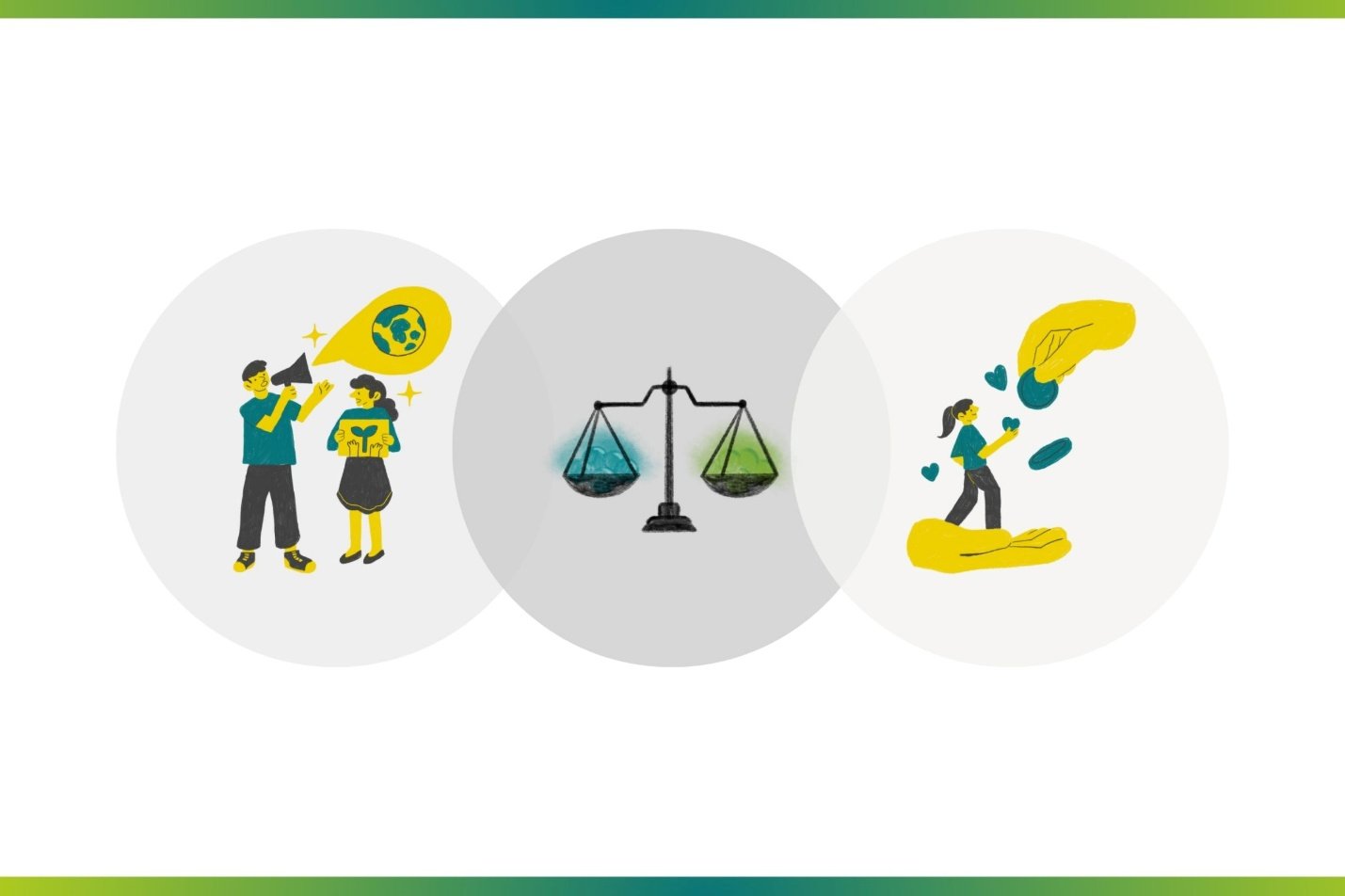
Globally, sustainability frameworks emphasize three interlinked pillars, environmental, social, and economic, which now anchor modern CSR strategy. In India, this sits on top of a mandatory 2% CSR spend regime, making it essential to use every rupee wisely.
2. Pillar 1: Environmental Stewardship
Environmental responsibility has moved from “good to have” to a boardroom priority as regulators, investors, and communities demand climate-conscious operations. The environmental pillar focuses on how a business uses resources, manages emissions, and minimizes its ecological footprint.
In 2026, leading CSR and sustainability programs typically prioritize:
- Climate action and carbon reduction – Energy efficiency, renewable energy adoption, and science-aligned emission targets.
- Resource circularity – Waste reduction, recycling, and responsible consumption across the value chain.
- Nature-positive initiatives – Urban greening, water conservation, and biodiversity-focused projects in nearby communities.
For Indian companies under the CSR law, environment-focused projects, such as watershed management, clean energy access, or climate-resilient agriculture, offer a powerful way to align mandatory CSR spends with long-term business continuity and community resilience.
3. Pillar 2: Social Equity & Community Resilience
The social pillar is about people: employees, communities, and those in your value chain. In 2026, expectations around equity, inclusion, and wellbeing are significantly higher, driven by younger workforces and socially aware consumers.
Key focus areas under this pillar include:
- Diversity, equity, and inclusion (DEI) – Fair hiring, safe workplaces, and inclusive leadership pipelines.
- Human capital and wellbeing – Skilling, mental health, and decent working conditions across employees and contractors.
- Community development – Education, health, livelihoods, and digital inclusion for underserved groups.
In India, CSR projects in education, healthcare, skill development, and rural development remain top priorities under Schedule VII, especially when co-created with credible NGOs and local communities. When companies invest in social equity, they also strengthen their talent pipeline, brand reputation, and community license to operate.
4. Pillar 3: Economic Responsibility & Governance
The third pillar is often misunderstood as “just profit”, but in sustainable CSR, economic responsibility means creating long-term value through ethical, transparent, and accountable business practices. It is closely linked to governance, the systems that ensure integrity and stakeholder trust.
Core elements in 2026 include:
- Ethical governance and compliance – Transparent reporting, anti-corruption, responsible lobbying, and strong board oversight of CSR and ESG.
- Responsible value creation – Supporting MSMEs, fair wages, local sourcing, and impact-linked investing that benefits communities alongside shareholders.
- Data-driven CSR and disclosures – Measuring outcomes, not just spends, and integrating CSR metrics into ESG and business reporting.
India’s CSR regime now expects timely spending of at least 2% of average net profits over the last three years, with unspent CSR amounts transferred to specific funds or “Unspent CSR Accounts.” This makes robust governance non-negotiable: boards must treat CSR not as an afterthought, but as a strategic responsibility.
5. Bringing the Three Pillars Together
The real power of CSR emerges when environmental, social, and economic pillars reinforce each other instead of working in silos. For instance, a climate-resilient agriculture initiative can:
- Improve farmer incomes (economic),
- Strengthen food and livelihood security (social), and
- Promote sustainable land and water use (environmental).
How the Three Pillars Interconnect
Pillar | Core Focus | Example CSR Theme in 2026 |
Environmental | Climate, resources, biodiversity | Renewable energy access, zero-waste programs, water stewardship |
Social | People, equity, inclusion | Skilling youth, DEI initiatives, community health & education |
Economic & Governance | Ethics, transparency, long-term value | Impact-led CSR strategy, strong board oversight, ESG-aligned reporting |
When companies design CSR portfolios that sit at the intersection of these three pillars, they move from “activity calendars” to integrated impact strategies. This is where CSR becomes a strategic lever for resilience, innovation, and competitive advantage.
Key Takeaways
- Sustainable CSR in 2026 is built on three interdependent pillars: environmental stewardship, social equity, and economic responsibility with strong governance.
- India’s mandatory 2% CSR spend raises the bar on governance, compliance, and impact accountability. “How” you spend matters as much as “how much.”
- CSR and ESG are converging, pushing companies to integrate community impact, climate action, and ethical conduct into core strategy and reporting.
- The most future-ready CSR portfolios sit at the intersection of the three pillars, delivering measurable outcomes for business, people, and planet.
FAQs
- Are the 3 pillars of sustainable CSR the same as ESG?
They overlap but are not identical: the three CSR pillars focus on environmental, social, and economic responsibility, while ESG typically frames these as environmental, social, and governance factors for investors and regulators. - How does India’s 2% CSR law influence sustainable CSR?
India’s Companies Act requires qualifying companies to spend at least 2% of their average net profits from the previous three years on CSR activities, with strict rules for unspent amounts, which pushes organizations towards planned, impact-oriented CSR rather than ad hoc donations. - What kind of projects fit all three pillars at once?
Integrated programs such as climate-resilient livelihoods, green skilling, social enterprises, or sustainable value chain development often address environmental impact, community wellbeing, and economic resilience in one design. - Is CSR still relevant when a company already has strong ESG reporting?
Yes; CSR provides the on-ground programs, partnerships, and community relationships that power ESG metrics and narratives, and emerging trends show CSR and ESG becoming operationally intertwined rather than competing agendas. - What role does technology play in sustainable CSR in 2026?
Technology, from AI to blockchain, is increasingly used for impact measurement, supply-chain transparency, and reporting, making CSR more traceable, credible, and scalable.
Sources
Corporate responsibility and ethics trends in 2026.
- https://www.thehillstandem.com/post/businesses-and-social-responsibility
- https://www.spglobal.com/en/press/press-release/sp-global-unveils-top-10-sustainability-trends-to-watch-in-2026
- https://www.mofo.com/resources/insights/260219-2026-trends-predictions-sustainability-corporate-responsibility
Pillars of CSR and sustainable development (environmental, social, economic, governance).
- https://www.komeet.cc/en/blog/4-main-pillars-of-csr
- https://greenly.earth/en-us/blog/company-guide/3-pillars-of-sustainable-development
- https://www.abeautifulgreen.com/en/three-pillars-csr/
India’s CSR law, 2% mandatory spend, and compliance updates for FY 2025–26 and 2026–27.
- https://www.marpu.org/post/how-do-we-match-employee-interests-with-the-right-causes
- https://www.marpu.org/post/what-is-required-under-india-s-csr-law-for-fy-2025-26
- https://uscib.org/indias-mandate-will-require-firms-to-spend-2-of-profits-on-csr-ud-4803/
Emerging CSR trends and CSR–ESG convergence in 2026.