
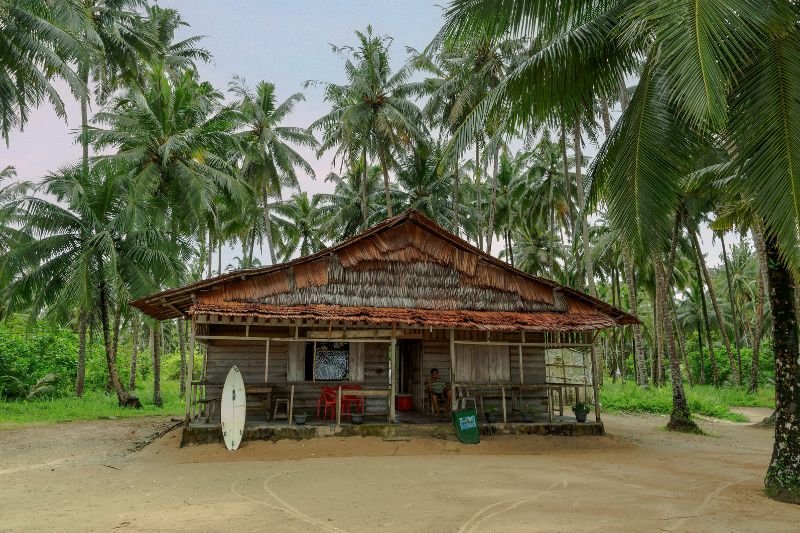
When Basics Become Privilege: Rethinking Impact Through Field Realities
Rhea Rao
Table of Contents
- The Distance Between Two Realities
- When Necessities Are Not Guaranteed
- Living Without What We Call “Basic”
- The Quiet Weight of Witnessing
- Rethinking “Impact”
- Beyond Gratitude: The Responsibility to Act
- Designing With Dignity
- Key Takeaways
- FAQs
The Distance Between Two Realities
There is a certain stillness that follows you back from a field visit.
It appears in the most ordinary moments, switching on a light without thinking, plugging into your phone before bed, letting water run a little longer than necessary. These actions feel automatic, almost invisible.
Until they’re not.
Because somewhere, not too far away, these are not the norms, but a privilege.
Working closely with communities during impact assessments often means stepping into realities that exist alongside ours yet feel worlds apart. Realities where access to basic amenities is uncertain, inconsistent, or entirely absent.
And once you’ve seen that closely, it becomes difficult to return unchanged.
When Necessities Are Not Guaranteed
In many of the communities we visit, daily life is shaped by the absence of what we consider “basic.”
Water is not readily available; it is fetched, stored, or rationed. Electricity is not reliable; it flickers in and out, sometimes absent for hours or even days. Cooking gas is not a convenience; it is a calculated expense, often replaced with firewood collected through time and effort. Healthcare is not accessible; it requires long travel, lost wages, and difficult choices. Education is not uninterrupted; children’s routines are shaped around household responsibilities and resource limitations.
These are not isolated challenges. They are interconnected realities that influence how people live, work, and hope.
Basic amenities, in these contexts, are not foundational; they are conditional, something that well-planned Corporate Social Responsibility (CSR) efforts aim to address, but only when grounded in real need.
Living Without What We Call “Basic”
What does it mean to live without a certainty of access?
- It means planning your day around daylight because electricity cannot be relied upon.
- It means prioritizing which device gets charged, if at all.
- It means studying under dim light or not studying at all.
- It means storing water carefully, knowing that the next supply is not guaranteed.
- It means adjusting aspirations to fit within infrastructural limits.
And yet, life continues, with resilience and happiness that is both humbling and unsettling.
Because the question is not how people survive these conditions. The question is why they have to.
The Quiet Weight of Witnessing
Field visits are not just professional exercises; they are deeply human encounters.
You meet people who speak of these challenges, not as hardships, but as routines. You hear stories shared without complaint, shaped by adaptation rather than expectation.
And in those moments, impact stops being an abstract concept. It becomes personal.
It is in the way someone describes the first-time electricity reached their home, the relief of not having to walk miles for water, the pride of a child being able to study after sunset.
These are not grand transformations. They are fundamental shifts, ones that restore time, dignity, and possibility. But witnessing also leaves a mark. Because once you understand these realities, indifference is no longer an option.
Rethinking “Impact”
Impact is often discussed in numbers, households reached, infrastructure built, percentages improved. But on the ground, impact is experienced differently.
It looks like a home lit steadily through the night. It feels like time is saved from daily struggles. It sounds like conversations that are no longer centered around scarcity. Impact, in its truest form, is not just about delivering resources. It is about enabling stability.
It is about creating conditions where people are not constantly negotiating for what should have been guaranteed, something that both need assessment and impact assessment processes to help uncover and address more effectively.
Beyond Gratitude: The Responsibility to Act
It is easy to respond to these realities with gratitude, to acknowledge our own access, and feel thankful. But gratitude alone is not enough because awareness, when left unacted upon, fades into the background of daily life.
The real shift happens when this awareness begins on an individual level. Beginning somewhere no matter how small the shift may seem.
How do we consume resources?
What kind of initiatives should we choose to support?
How do organizations design and implement their interventions within a structured CSR management approach?
Impacts are not just created in the field. It is shaped by the intent and responsibility carried into it.
Designing With Dignity
One of the most important lessons from the field is this: communities are not passive recipients of support.
- They are active participants with a deep understanding of their own realities.
- Effective impact, therefore, is not about imposing solutions. It is about co-creating them.
- It requires listening, truly listening to what people need, not what we assume they need.
- It requires designing interventions that are context-sensitive and sustainable.
- It requires respecting the dignity and autonomy of every individual involved.
At Chrysalis Services, these insights are not peripheral; they are central to how we approach end-to-end management of social impact initiatives.
Because meaningful impact does not come from a distance. It comes from proximity, empathy, and alignment.
Key Takeaways
Basic amenities like water, electricity, healthcare, and education remain inaccessible for many, turning necessities into privileges.
Field visits reveal the lived realities behind data, making impact more human and contextual.
Witnessing these conditions creates a responsibility to move beyond awareness into action.
True impact is not just about access; it is about stability, dignity, and long-term change.
Community-driven, context-aware solutions are essential for sustainable impact within Corporate Social Responsibility (CSR) initiatives.
FAQs
1. Why is it important to consider multiple basic amenities in impact assessment?
Because challenges related to water, electricity, healthcare, and education are interconnected and collectively shape quality of life, making both need assessment and impact assessment critical.
2. How do field visits influence better decision-making?
They provide real-world context, helping organizations design interventions that are relevant, effective, and sustainable within their CSR strategies.
3. What does “impact with dignity” mean?
It means creating solutions that respect people’s agency, involve them in the process, and address their needs without imposing external assumptions.
4. How can organizations ensure long-term impact?
Focusing on community participation, continuous feedback, and solutions that are adaptable to local realities, supported by structured CSR management practices.
Some experiences do not demand attention; they quietly reshape perspectives.
Field visits are one of them.
Because once you’ve seen a world where even the most basic amenities are considered a privilege, you begin to understand that impact is not just about change.
It is about restoring what should have never been out of reach in the first place.